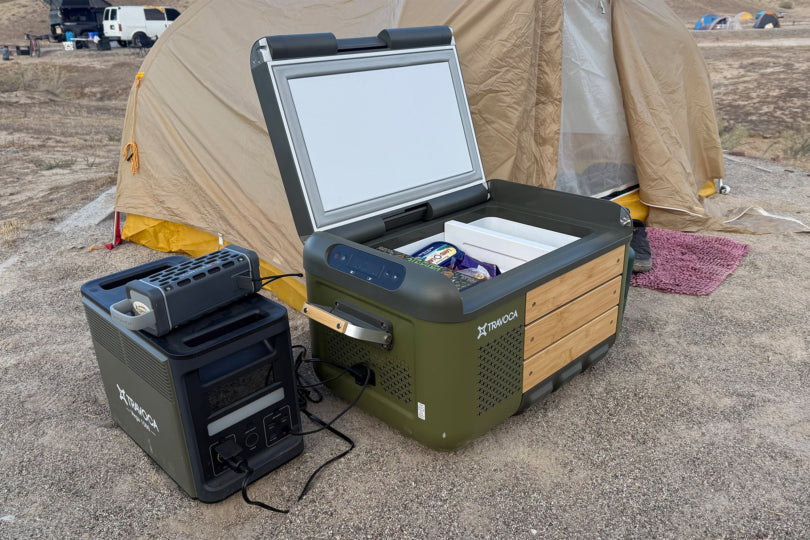


Electric coolers and camping fridges that run on 12V power will not be strangers to readers of Outdoor Life, as these products quickly made their way into all camping, overlanding, van life, and road trip adventure essentials.
A fridge can be a game-changer, yes, but so is half of your energy expenditure—how you can power it. The part of this equation that people least like to discuss is what you can use to power your 12V fridge when you get out into the bush.
Below, we’ve broken down the three best methods to power your camping fridge or electric cooler, including what really works and what doesn’t with each. Whether you're car camping, overlanding, or living out of your rig, we hope this has you dialed in with what you need to get started.
Before We Begin: What Actually Powers a 12V Fridge?
One of the misunderstandings concerning solar panels is that they can power a camping fridge. They can't.
A 12V fridge can only be powered by:
-A 12-volt battery, or
-An AC wall outlet (with the fridge’s included adapter)
Solar panels are chargers, not power sources. They keep your battery charged, but you can’t power your fridge with solar panels.
All set, we can move to explain and describe three very viable means by which you can power an electric cooler.
1. Using Your Vehicle’s Starter Battery
(Not recommended for most campers)
One of the first things new RVers think about doing is hooking up their fridge to the 12V outlet in their vehicle and calling it a day. And, in truth, it does work—but only if your engine is running.
But, keeping your main battery as your startup battery together with your RV, there are serious complications involved.
Why This Isn’t Ideal
1. Starter batteries aren’t designed for long, slow power draw.
The main characteristic of lead-acid batteries, and what they are designed to accomplish, is providing one massive boost of power to start your engine. They simply aren't intended to power anything gradually over time, such as your fridge at night.
2. You risk waking up to a dead battery.
If your engine is not running and your alternator is not charging, your fridge can drop your battery level too low to start your car. If you're camping remotely, this isn’t just inconvenient—it can be dangerous.
Why Some People Still Use It
But some campers claim not to have had any problems with this tactic. This method may be applicable if one is making a quick stop-over or day trip. But in dispersed camping and/or camping in primitive sites, it's plain that the danger simply outweighs the convenience.
Best For
-Short stops
-Roadside picnics
-No overnight use
Not Recommended For
-Overnight camping
-Remote locations
-Anyone who wants reliable, worry-free power
2. A Permanent Dual Battery System (House Battery + DC-DC Charger)
The tradition in camping fridge power was to provide a gold standard by erecting a secondary battery specifically designed inside cars, referred to as house batteries.
This system typically includes:
-A deep-cycle AGM or lithium battery
-A DC-to-DC charger
-Wiring, mounts, outlets, and fuses
As long as the engine is running, it supplies power to charge the DC-DC converter, thereby safely charging the house battery. The fridge then derives its power from this secondary battery and not the starting battery.
Why This System Works So Well
1. “Set it and forget it.”
After its installation, it works automatically. Drive → battery charges → fridge stays cold.
2. Safe for battery health.
DC-DC chargers provide an optimal charging pattern for AGM or Lithium batteries, significantly prolonging their life expectancy, unlike traditional charging by an alternator.
3. Reliable for long trips.
This system is absolutely ROCK-Solid for overlanding, trucks, and sport utility vehicles that spend time OFF-GRID.
But There Are Clear Downsides
1. Cost
With battery, charger, wiring, mounts, and install, it often costs $1,500–$2,500, sometimes more than the fridge itself.
2. Permanent installation
It's bolted into the vehicle. You can't take it with you into a tent, move it into another vehicle, or provide power portability.
3. Under-hood limitations
Lithium batteries cannot be installed in the trunk due to temperatures, leaving many with no choice but to go with AGM or find trunk space.
4. Requires proximity
For instance, if you need CPAP support at night, you must camp near enough so that you can run a cable from your vehicle.
Best For
-Long-term overlanding builds
-Dedicated off-road vehicles
-Campers who want a seamless, vehicle-integrated system
Not Ideal For
-Renters
-People who switch vehicles
-Anyone on a budget
-Campers who need portable power away from the vehicle
3. Portable Lithium Power Stations (The Fastest-Growing Option)
Compact, self-contained, and portable lithium power stations are becoming ridiculously trendy, and with good reason. For many campers, these devices offer the most convenient means of powering their camping fridge.
Within one unit, you can find:
-A lithium battery
-A built-in charger
-DC and USB ports
-A display showing input, output, and battery life
-Optional AC outlets and inverter
They work straight out of the box—no wiring, no installation.
Why They’re So Popular
1. They’re fully portable.
Power your fridge with your automobile during day time. Take the power station with you into your tent at night; Take it out to the beach or to a picnic table; Total Flexibility.
2. Easy charging options
Power stations can charge via:
-Wall outlet
-Vehicle 12-volt outlet
-Solar panel
-Generator
3. Lightweight and compact
Portable, easy to store, and has uses far beyond fridge capacity—lighting, communications, power tools, cameras, and so on.
Downsides to Be Aware Of
1. Built-in battery lifespan
The entire device turns into an e-waste once the battery has expired. It can't be replaced, unlike when one buys a battery box.
2. Limited 12-volt output
Most power stations limit the cigarette-style plug to 10 amps, which may not be enough for diesel heaters or devices that require a high startup surge.
3. AC outlets drain power quickly
The usage of the inverter in powering 110V devices cuts down runtime considerably. Refrigerator should employ the 12V connection whenever available.
Best For
-Most campers
-Car camping
-Tent camping with CPAP
-Beach days, tailgates, backyard power
-Anyone who wants simple, portable power
Not Ideal For
-High-amp 12-volt devices
-Ultra-long expeditions with heavy electrical loads
4. Battery Boxes (Replaceable Battery, Maximum Flexibility)
Battery boxes combine the flexibility of a portable power station with the advantage of using a replaceable internal battery.
Inside the box, you install any deep-cycle battery you want—AGM or lithium—and connect it to the integrated outlets, breakers, displays, and DC-DC charge input.
Why Battery Boxes Are So Practical
1. Batteries are replaceable
When the internal battery eventually dies, you simply swap in a new one. The box, wiring, and ports remain.
2. High-amp 12-volt ports
Unlike many power stations, battery boxes often include Anderson connectors that support more than 10 amps—perfect for diesel heaters or larger appliances.
3. Portable and versatile
Move it between vehicles, place it inside your tent, carry it anywhere.
4. Solar-ready
Most boxes include dedicated solar input that routes through the charger to protect the battery.
Downsides
1. Larger physical size
They’re bulkier than compact power stations.
2. No AC inverter
Some campers may expect 110-volt output, but removing the inverter cuts cost, weight, and unnecessary power loss.
Best For
-Campers wanting longevity and replaceable batteries
-High-amp 12-volt users (diesel heaters)
-Overlanding builds needing portable power
-Multi-vehicle households
Final Thoughts: Which Power Option Should You Choose?
Here’s the bottom-line summary:
Use your vehicle’s starter battery if:
You’re only powering the fridge for short periods while driving.
(Not recommended for overnight use.)
Choose a dual battery system if:
You want a fully integrated, vehicle-mounted solution for long-term travel and don’t mind the cost or complexity.
Choose a portable lithium power station if:
You want the most convenient, beginner-friendly, and flexible option for car camping, tent camping, and everyday use.
Choose a battery box if:
You want the versatility of a portable system with the ability to replace the battery and run higher-amp devices.